Here’s where I’ll post any screenings coming up that Zena and/or I are programming!
>>>(Click pictures for links to info/tickets!)<<<
*
Thursday, March 26, 2026 @ 8:00pm
2220 Arts + Archives, Los Angeles
Polish Animation pgm 1: Flames in Dark Places (1962-74)
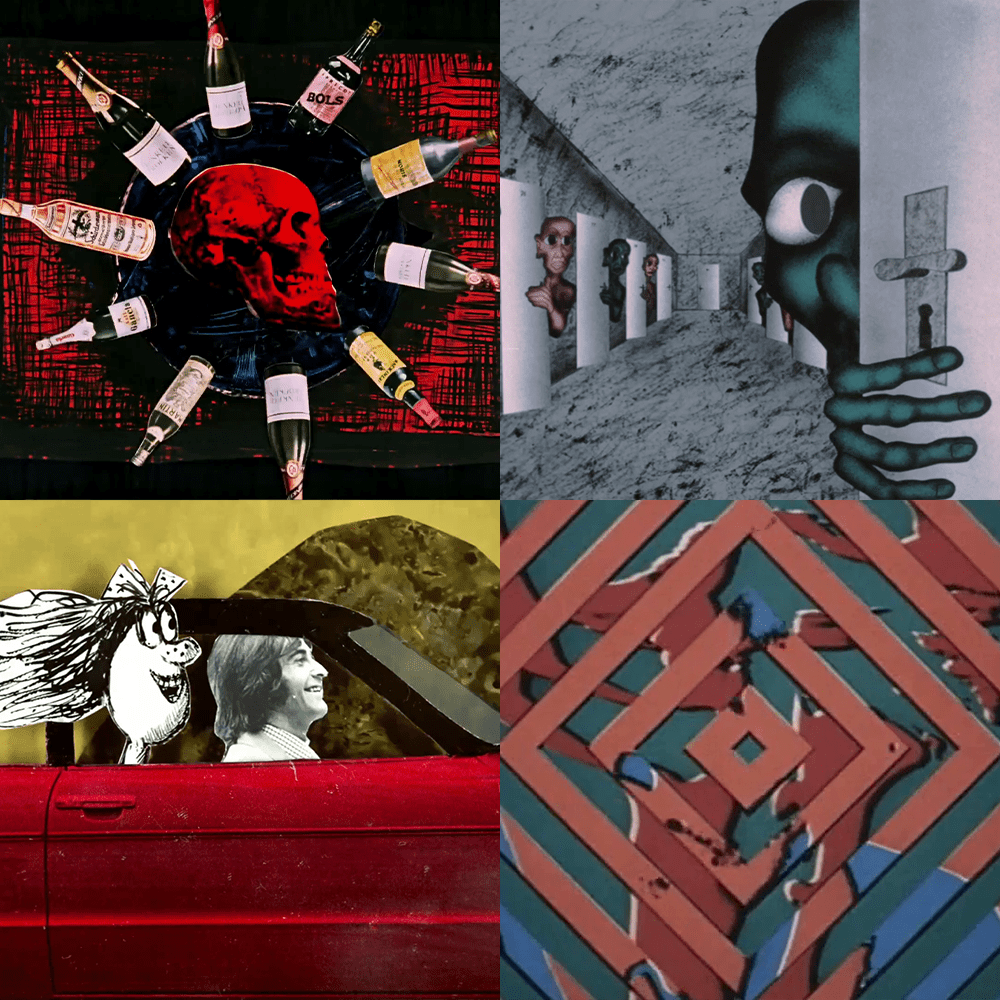
Lightstruck is elated to present two full evenings of rarely screened animated shorts from one of the most significant centers of experimental animation production and creativity in the history of the medium: Poland. Spanning the early 1960s to the late 1980s, these two programs (March 26 and April 16) will showcase an incredibly eclectic selection focusing on little-known masterworks and deep-cut revelations, all screening in recent restorations.
Poland has an extraordinary animation history marked by radical experimentation in technique and texture, investigating dark and complex themes inspired by social critique and surrealist visions alike. Spanning stop motion, cutout, cel, paint on glass, and hand-drawn approaches, these programs extend to include exceptional techniques such as Zbig Rybczyński’s hyper-complex optical printing, Piotr Dumała’s exquisite renderings on plaster slabs, and Julian Antonisz’s unhinged cameraless animation produced on ingenious, visionary devices of his own making. A morbid and uneasy humor often punctuates these works, which pulse with rich, emotional, and dramatic narratives and themes matched only by the exceptional imagination and talents of their authors.
We selected the films for these programs with an emphasis on shorts not generally available on home media, and spanning a particularly diverse array of styles, aesthetics, techniques, and sensibilities. Widely celebrated artists like Rybczyński, Antonisz, Ryszard Czekała, and Jerzy Kucia will be represented by lesser known (but magnificent) offerings, while deeply memorable obscurities from Jacek Kasprzycki, Zofia Oraczewska, Ryszard Antoniszczak, and Ewa Bibańska will further illuminate Poland’s incredible spectrum of animation genius.
Programs by Zena Grey and Mark Toscano. Notes by Mark Toscano. Films courtesy of Wytwórnia Filmów Dokumentalnych i Fabularnych (+ thanks to Stanisław Bardadin) and Filmoteka Narodowa – Instytut Audiowizualny (+ thanks to Adrian Smykowski and Julia Bachman).
*
Sunday, April 12, 2026, 6:30pm
Xcèntric @ The CCCB, Barcelona, Spain
Akran (1969) by Richard Myers
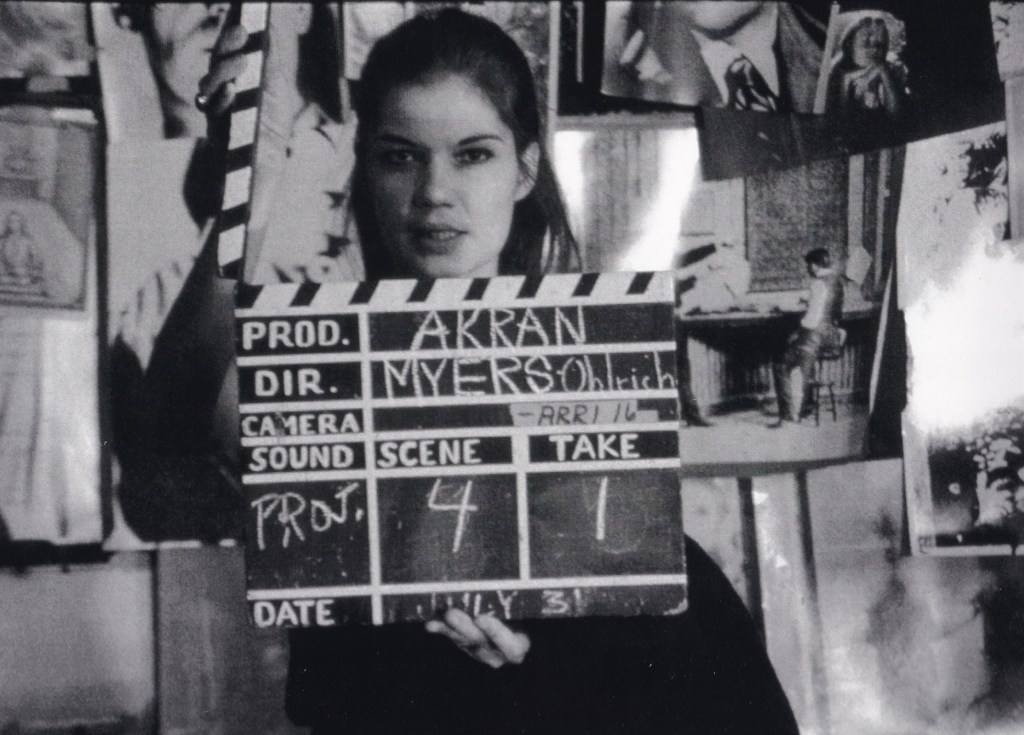
American filmmaker Richard Myers’ first feature-length film, Akran (1969), feels like both a culmination of the emotional and psychic upheaval of the previous decade, and an unsettling new vision of the world to come. Rather than a utopian image of human connectivity and lucid sociopolitical optimism, this is a journey through the wreckage of an American cultural and political landscape that has devolved into an existential confusion of purpose and place.
A multigenerational native of Ohio, Richard Myers began making his vividly dreamlike films in 1960 and quickly distinguished himself as one of the most sophisticated and daring explorers of the contemporary American psyche. His filmmaking language encompasses the entire vocabulary and history of cinema, employing numerous ingenious techniques and effects, as well as sublimated and conscious references to cinema history and culture, on an elaborate scale of production and vision that elevates his work to the level of the truly mythic. Further defined by Myers’ collage editing and sometimes almost painfully expressive, haunting cinematography, these conceptual and material innovations conjure up a singular and astonishingly ambitious vision of fragmented cultural consciousness from firmly within the heart of the American Midwest.
In Akran —a deliberate misspelling of the Ohio city of Akron that suggests instability at the fundamental level of daily existence— a young couple meet and traverse a series of mystifying and sometimes harrowing urban spaces, haunted by dreams, memories and a pervasive, unsettling confusion. They encounter numerous unnerving characters and scenarios in their attempts to define some kind of contemporary American normalcy, and the film radically resists any reassuring structure or linear narrative as the false security of memory and nostalgia continually fragments and implodes their (and our) comprehension of the present.
As with the majority of Myers’ truly hypnotic, immersive films, in Akran the lines between reality, dream, memory and nightmare are never fixed, and the collage of associations that he creates often manifests multiple emotions simultaneously. Myers’ restless, searching camerawork and quite sophisticated approaches to editing build an anxiety and uncertainty within the film and its protagonists, powerfully underscored by an often unrelenting electronic soundtrack by composer Fred Coulter.
In Film as a Subversive Art, Amos Vogel rightfully wrote that “Myers is unquestionably a major talent of the American avant-garde and Akran one of his most important films”. Myers’ entire body of work is without parallel or comparable sensibility, and his ambition, creativity and audiovisual ingenuity are incredibly rich and involving. The Academy Film Archive restored Akran in its original 16mm format in 2010, and. though still too little known, this underseen masterpiece continues to find passionate admirers every time it is screened.
Akran, Richard Myers, 1969, 16mm, 118 min.
Program and notes by Mark Toscano. 16mm screening, original version with Catalan subtitles. Copy supplied by the Academy Film Archive.
*
Thursday, April 16, 2026 @ 8:00pm
2220 Arts + Archives, Los Angeles
Polish Animation pgm 2: Chance & Transition (1975-89)
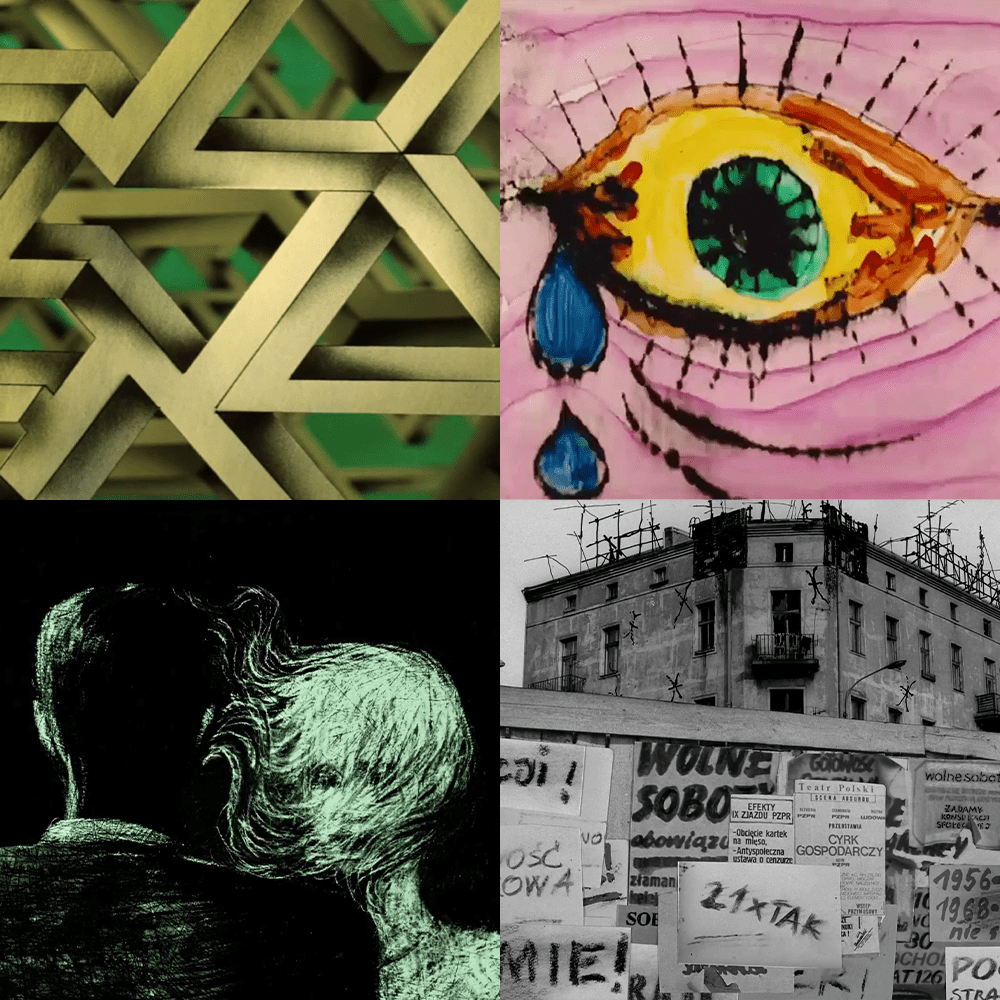
Lightstruck is elated to present two full evenings of rarely screened animated shorts from one of the most significant centers of experimental animation production and creativity in the history of the medium: Poland. Spanning the early 1960s to the late 1980s, these two programs (March 26 and April 16) will showcase an incredibly eclectic selection focusing on little-known masterworks and deep-cut revelations, all screening in recent restorations.
Poland has an extraordinary animation history marked by radical experimentation in technique and texture, investigating dark and complex themes inspired by social critique and surrealist visions alike. Spanning stop motion, cutout, cel, paint on glass, and hand-drawn approaches, these programs extend to include exceptional techniques such as Zbig Rybczyński’s hyper-complex optical printing, Piotr Dumała’s exquisite renderings on plaster slabs, and Julian Antonisz’s unhinged cameraless animation produced on ingenious, visionary devices of his own making. A morbid and uneasy humor often punctuates these works, which pulse with rich, emotional, and dramatic narratives and themes matched only by the exceptional imagination and talents of their authors.
We selected the films for these programs with an emphasis on shorts not generally available on home media, and spanning a particularly diverse array of styles, aesthetics, techniques, and sensibilities. Widely celebrated artists like Rybczyński, Antonisz, Ryszard Czekała, and Jerzy Kucia will be represented by lesser known (but magnificent) offerings, while deeply memorable obscurities from Jacek Kasprzycki, Zofia Oraczewska, Ryszard Antoniszczak, and Ewa Bibańska will further illuminate Poland’s incredible spectrum of animation genius.
Programs by Zena Grey and Mark Toscano. Notes by Mark Toscano. Films courtesy of Wytwórnia Filmów Dokumentalnych i Fabularnych (+ thanks to Stanisław Bardadin) and Filmoteka Narodowa – Instytut Audiowizualny (+ thanks to Adrian Smykowski and Julia Bachman).
*
Sunday, May 24, 2026 @ 12:00pm
2220 Arts + Archives, Los Angeles
**note atypical start time!**
Ulrike Ottinger’s TAIGA: A Journey to Northern Mongolia
This screening begins at 12pm noon and will conclude at approximately 10pm, with two breaks.
“Taiga is an experience that causes us to think about why we live as we do, what it is to be human, and what is important in life.” (Roger Ebert)
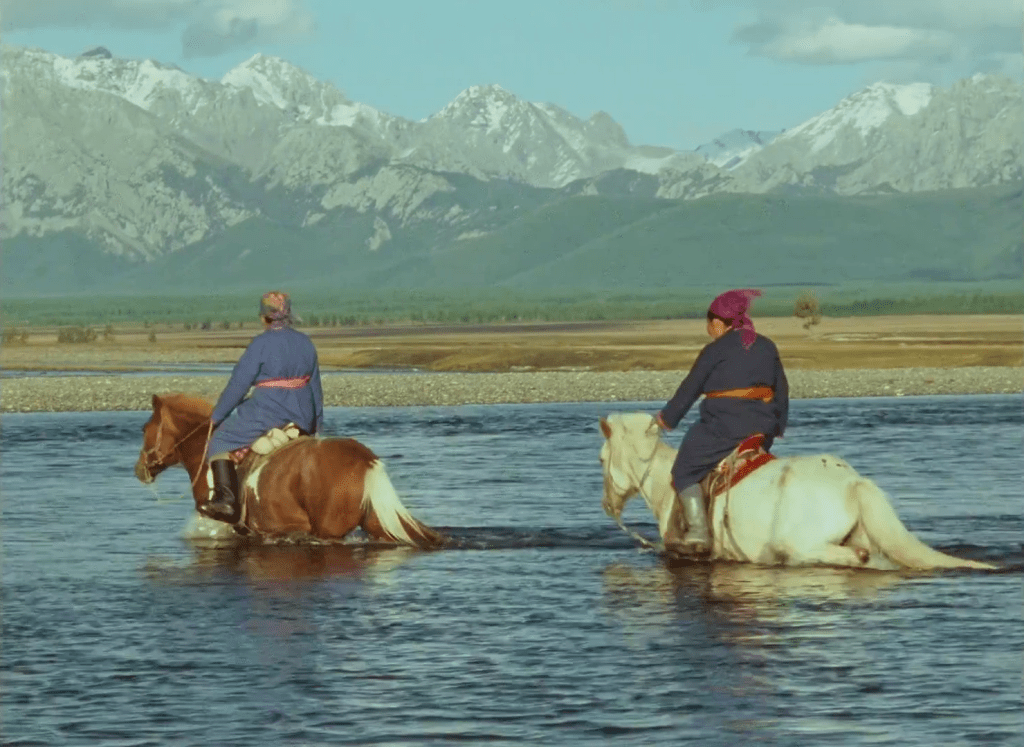
Lightstruck is extremely excited to present a truly epic cinematic experience, as we screen Ulrike Ottinger’s nearly 8.5-hour, immersive documentary Taiga (1992) in a special all-day screening.
Known for her meticulously crafted experimental narrative films infusing political radicalism with a rich, surrealist opulence, German artist Ulrike Ottinger has also produced a singular body of memorable nonfiction work, though perhaps none so monumental – and mesmerizingly beautiful – as Taiga.
During an extended period spent in Northern Mongolia through multiple seasons, Ottinger approached ethnography in a radically different way, rejecting authoritative narrativizing or presumptuous didacticism. The extended length of the film reflects Ottinger’s larger impulse and approach in this project: to spend time – unadulterated, attentive time – with the Northern Mongolians she had befriended, and to enable their own distinctive approach to time and space in everyday life dictate the scale and pace of the film.
Over ten parts and 38 chapters, we see a seance, two weddings, preparation of foods, wrestling contests, music performances, storytelling sessions, and countless other events large and small, yet all equally defining the overall year-to-year and day-to-day experiences of nomadic life in the Darkhad Valley of Northern Mongolia. The film succeeds so brilliantly in part because of the unapologetically and earnestly fascinated gaze with which Ottinger documents what she sees, and the clear love for and engagement with people that the filmmaking reflects.
“I tried to explain my wish, which was to record a way of life that no longer exists in the place where I’ve come from, in order to show the document to the people back home, who are very interested in the nomadic ways. At first this puzzled them, but then they thought, Yes, indeed, we too would be interested to know how your people live…” (Ulrike Ottinger)
Screening:
Taiga: A Journey to Northern Mongolia (1991/92)
by Ulrike Ottinger
501 minutes, English subtitles
Digital restoration courtesy of Arsenal with thanks to Carsten Zimmer, Reinhild Feldhaus, and especially Ulrike Ottinger.
Program by Zena Grey and Mark Toscano. Notes by Mark Toscano.
Snacks, coffee and tea will be provided, as well as some dinner at the evening break, for a suggested donation.
Schedule:
12:00pm: Part 1 (Chapters 1-13) (2:57)
(ends 3:00-3:15)
(approximately 20 minute intermission)
3:30pm: Part 2 (Chapters 14-26) (2:52)
(ends 6:30-6:45)
(approximately 45-60 minute intermission)
7:30pm: Part 3 (Chapters 27-38) (2:32)
(ends 10:00-10:15pm)
 LIGHTSTRUCK