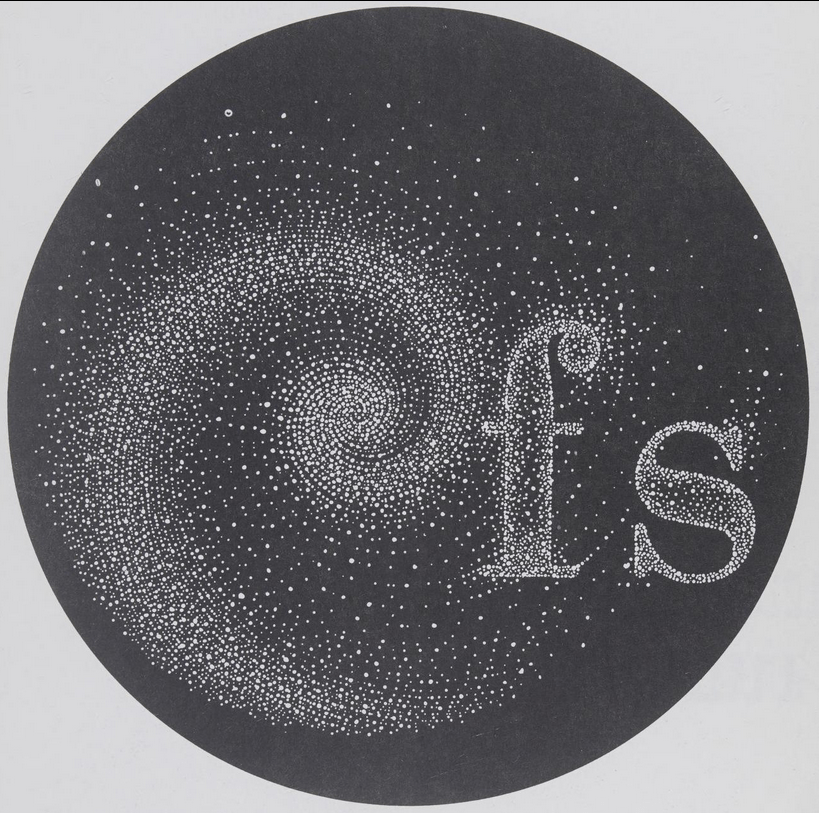
Creative Film Society was one of the earliest organized distributors of experimental cinema on the West Coast, but also in the United States. Founded by Robert Pike in 1957 in the Los Angeles area, CFS offered an extensive catalog of primarily 16mm (with some 35mm) films over the years, distributing a wide range of work particularly by West Coast American filmmakers, with whom Pike was most familiar and in touch. Abstract and animated films played an especially important role in their catalog, though they also handled plenty of live action, documentary, and other genres. CFS also had relationships with some small distributors and collectives in other countries, and represented independent films from France, Australia, and elsewhere. Supplementing these offerings were a large amount of classic shorts and animations, including films by Emile Cohl, Georges Méliès, the Fleischers, and comedy shorts featuring Abbott & Costello, Charles Chaplin, Buster Keaton, and W.C. Fields, among many others. Some of the more popular filmmakers whose work was distributed long-term by CFS included Jordan Belson, Mary Ellen Bute, Oskar Fischinger, Hy Hirsh, and John & James Whitney, but CFS also carried titles at various times by Kenneth Anger, Bruce Conner, Will Hindle, Norman McLaren, Kathy Rose, Chick Strand, Stan Vanderbeek, and numerous others, including many filmmakers from UCLA and USC film schools. Some of their independent shorts, though perhaps less known today, were extremely popular or even iconic in their time, such as Howard Lester’s Airplane Glue I Love You, Shev Goldstein’s Krasner, Norman: Beloved Husband of Irma, and Len Janson & Chuck Menville’s Vicious Cycles.
CFS was based successively out of locations in Burbank, Van Nuys, and Reseda over the years, initially out of Pike’s home, but later out of a separate studio when the business became more successful. Robert Pike died in 1974, and CFS continued its activities until 1999, run by his wife Angeline Pike. At the time of Angeline Pike’s dissolution of the distribution operation, the films were dispersed primarily between the UCLA Film & Television Archive and The iotaCenter, whose collection resides at the Academy Film Archive. Some other prints seem to have been purchased by CalArts, and I have come across other CFS prints “in the wild” in the collections of various institutions and individuals, but these are most likely a result of historical purchases going back many years when CFS was still in operation.
The memorable CFS logo as displayed above was designed for CFS by none other than James Whitney, and the animated version of the logo that was spliced to the heads of some of their distribution prints was executed by animator and visual effects artist Robert Swarthe.
Although generally speaking they operated as a nonexclusive distributor (particularly during Angeline Pike’s tenure running CFS), in some cases, Robert Pike acquired films outright from filmmakers. He apparently had a few different options for representing films: a filmmaker could supply a print to CFS for distribution at the filmmaker’s expense, and receive a larger percentage of the rental royalties; a filmmaker could sell a print to CFS for a fee up front, and CFS could then distribute the film for the effective life of the print, with the filmmaker receiving a smaller percentage of royalties; or a filmmaker could sell a film outright – printing elements and copyright – for a more substantial sum, but then no longer own their film or receive royalties. A couple of filmmakers told me about their experiences with CFS in this regard. For example, Ben Van Meter sold his films Some Don’t and Up Tight… L.A. is Burning… Shit outright to CFS, because he needed the money at one point, whereas Robert Nelson sold prints of Oily Peloso the Pumph Man and Confessions of a Black Mother-Succuba for distribution just for the life of the print. Nelson also told me he got upset at Pike for licensing a still image from his film Oh Dem Watermelons to Playboy, keeping the fee and not telling Nelson about it (who found out only when he saw it in Playboy himself), but it’s also possible that this was something permissible by the distribution arrangement that Nelson had misinterpreted. Bruce Conner also had issues with CFS and Robert Pike, but James Whitney had a great fondness for the Pikes and CFS. But bottom line, like any independent distributor, complex personalities played a huge role, and while many filmmakers loved Pike and CFS, some inevitably had issues with CFS for various reasons.
The 1975 CFS catalog contains the following text giving a bit of an overview of the background of CFS, and its identity and intent as of 1975:
“The Creative Film Society was formed in 1957 by Robert Pike, as an informal affiliation of West Coast filmartists dedicated to the promotion of film as an art form. Our primary function was the rental and sale distribution of the 16mm. motion pictures produced by our members. But as rental and sale interest increased through the years for film-art shorts, it became necessary for us to similarly increase the concept of our distribution function to meet the needs of our customers. For this reason, we added to our rental library classic examples of all types of creative short subjects, as well as several historically important feature films. At the same time, we invited filmartists from other areas, both in this country and abroad, to allow us to represent the best examples of their work, in addition to any distribution representation they might already have. As a result, today the CFS has the most comprehensive 16mm. rental library of film-art shorts in this country, ranging in style from old-time comedy classics to the most sophisticated examples of pure film-art, and ranging in time from the earliest works of Edison, Melies, and Cohl to the latest film-art shorts produced in 1974.
“Originally, the CFS film rental library was designed to meet the needs of college and private film societies, as those organizations were the basic customers for film-art shorts. However, in recent years, with an ever-increasing emphasis being placed on the motion picture medium as the primary vehicle for the communication of ideas and information, we have found that most of the films in our rental library are equally useful to religious groups, public schools, and classes in film history and appreciation. Therefore, from the over nine hundred 16mm. films listed in this catalogue, we are proud to state that virtually every type of organization can find material to fit its needs. Moreover, our films are continually being reviewed in such publications as: The Booklist, Media & Methods, The Christian Advocate, Landers Film Reviews, Filmmakers Newsletter, Media for Christian Formation, as well as the regular film-art magazines and books. Wherever possible, we have quoted from these reviews in the catalogue descriptions as an aid to your selection decision. However, should any customer wish further clarification as to whether a specific film is suitable for his use, he need only write or phone us, and we will be happy to discuss the selection of appropriate films to fit his needs. We do not, however, accept collect phone calls.”
For his Master’s thesis at UCLA in 1960, Robert Pike wrote a crucial text called A Critical Study of the West Coast Experimental Film Movement for which his firsthand knowledge of the films and filmmakers of the region informed his research. There are many artists and films covered in this thesis that are not written about in any other extant critical text, and I highly recommend seeking out a copy of this document.
Robert Pike also wrote, with Dave Martin, a book called The Genius of Busby Berkeley, which was published in 1973 under the imprint CFS Books. As of this writing, it can be found on the Internet Archive.
Finally, I’ve uploaded a copy of the 1975 CFS catalog here, the file of which was produced under the auspices of Los Angeles Filmforum as part of its Getty-sponsored Pacific Standard Time project, Alternative Projections. Additionally, an oral history with Angeline Pike can be found at Filmforum’s Alternative Projections site.
 LIGHTSTRUCK