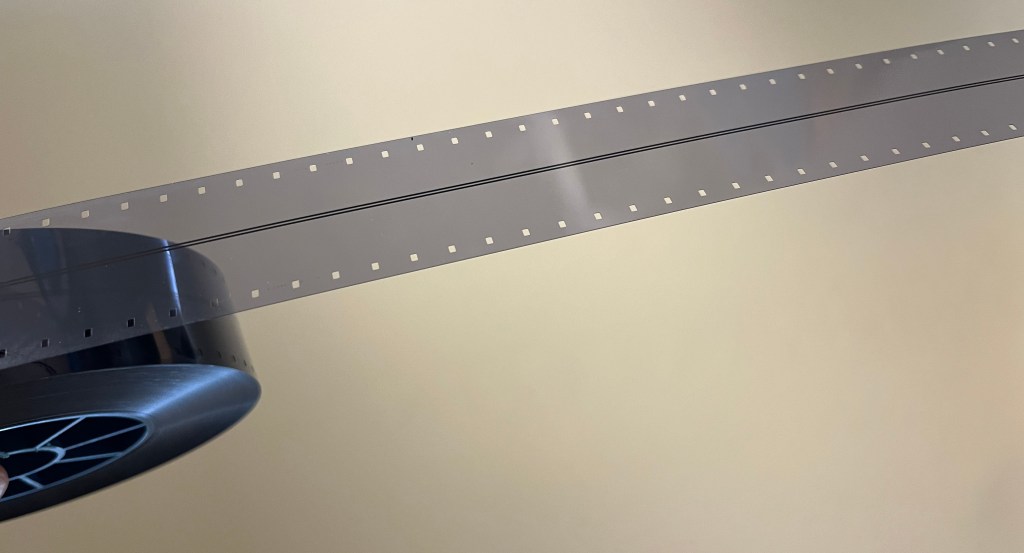
The 35/32mm format was initially devised and employed starting in the mid-1950s at General Film Labs, and at least Kodak and Dupont produced 35/32mm versions of some of their film stocks. Various other labs later adopted it as an option, though it seems to have been much more commonly used in Los Angeles area labs, since the high volume and efficient printing/processing capability it enabled was more necessary there. But it was definitely used in other parts of the country, typically at other higher-volume labs. I’m not sure of its international use history.
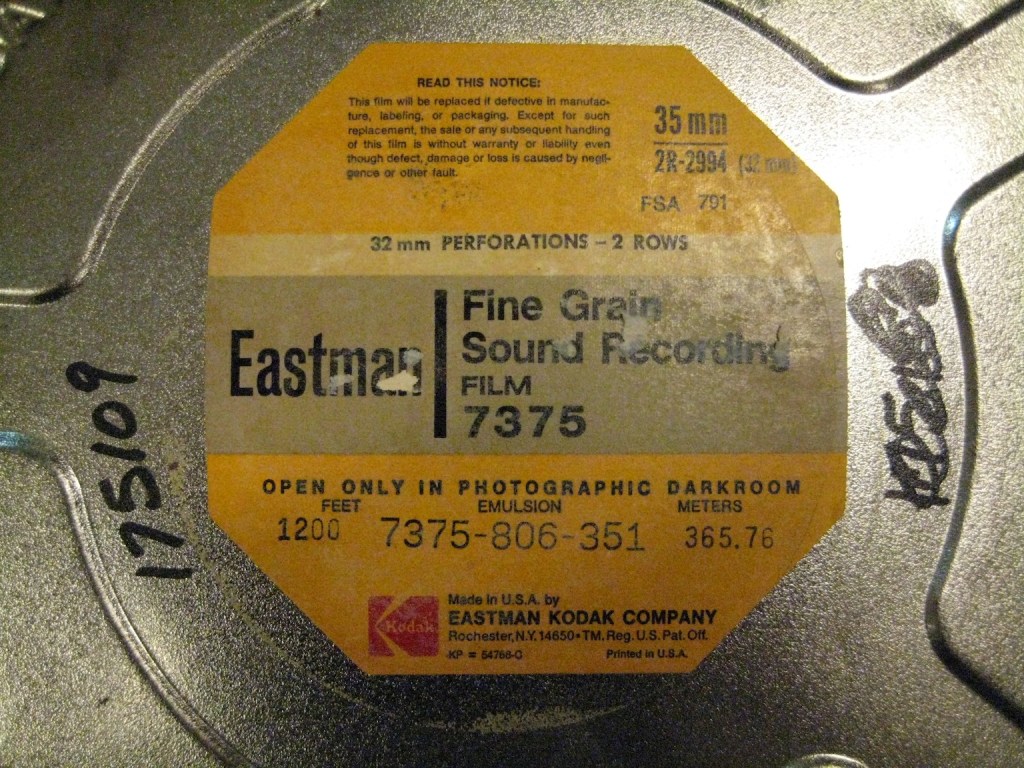
Very basically, it’s 35mm film with 16mm perforations that can have an image and/or track up just one or up and down both sides of the stock. The photo at the top of this page is of a 35/32mm optical track negative, with the track only up one side. It was only ever available in intermediate, sound recording, and print stocks, and typically would be used to enable the printing and processing of 16mm prints without needing to change the essential parts and mechanism of a 35mm processing machine. Additional benefits were that the format offered more stability (and therefore slightly higher image and sound quality) in printing, not to mention the possibility of producing two prints at once with only one run of the internegative through the contact printer. Prints from 35/32mm internegatives would be struck onto 35/32mm print stock, and then the 35/32mm print would be slit down the middle (with 1.5mm trimmed from each edge) to yield two 16mm prints.
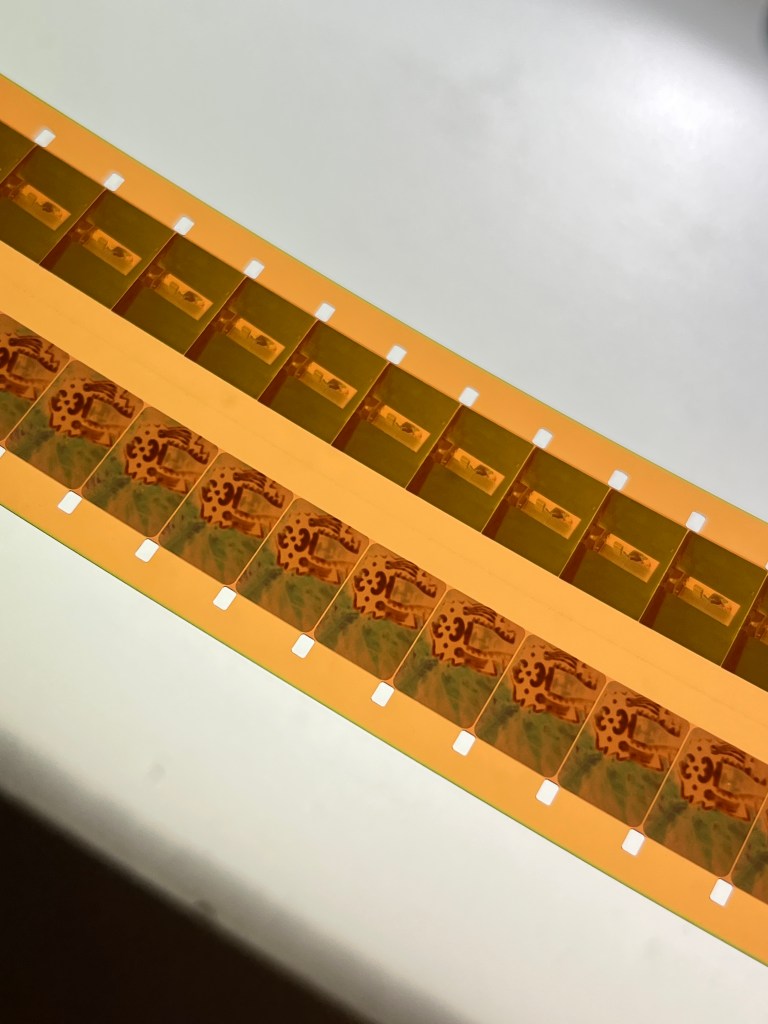
I’d like to write more about this format, but am still gathering some info and sources. In the meantime, I wanted to upload this article from the January 1960 issue of American Cinematographer, in which the benefits and uses of the 35/32mm format are summarized pretty well.
 LIGHTSTRUCK